
Exercise physiology

Exercise physiology in Kiama

Exercise works like a medication: the right dose helps, the wrong dose does nothing or hurts. An Accredited Exercise Physiologist works out your dose, supervises it, and changes it as you improve.

NDIS, Medicare care plans, DVA, workers compensation and private health all accepted.

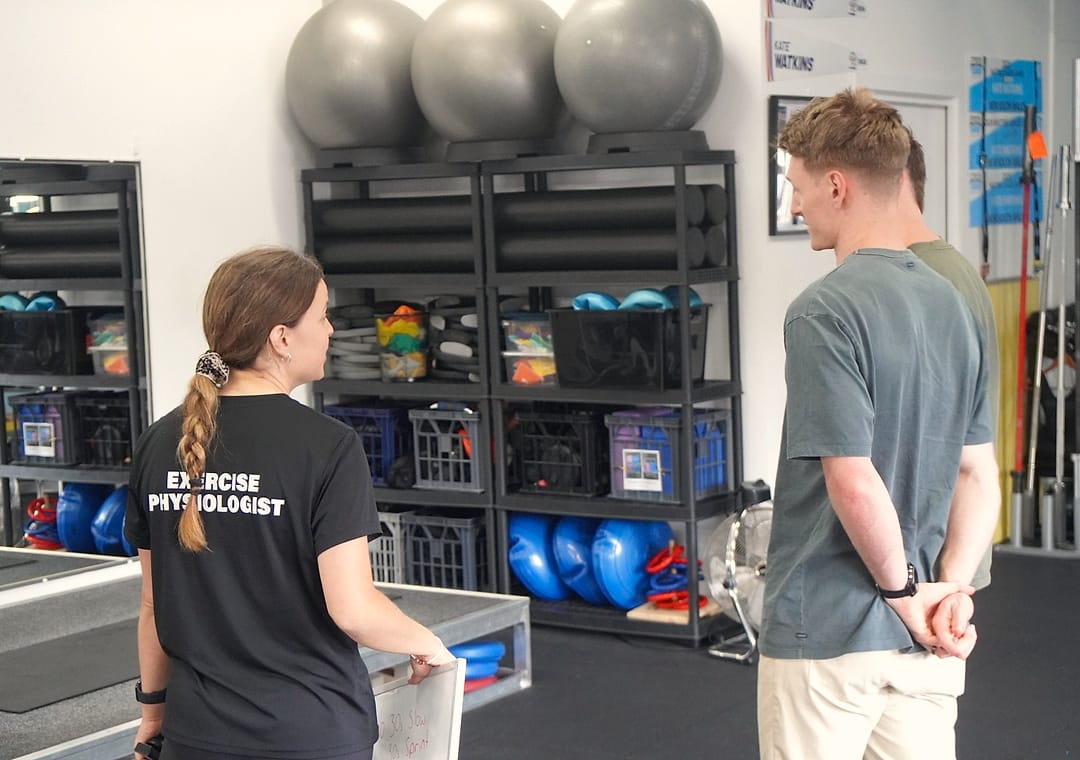
An exercise physiologist talking two clients through a session on the gym floor
Who it helps

When exercise is the treatment

Exercise physiology is for people managing something ongoing, or rebuilding after something significant. It is not a gym membership with a nicer name.

Managing a condition

  • Type 2 diabetes and pre-diabetes
  • Heart conditions and cardiac rehabilitation
  • Cancer care — during and after treatment
  • Osteoarthritis, osteoporosis and joint pain
  • Persistent pain that has not responded to rest

Rebuilding capacity

  • NDIS participant goals, funded through your plan
  • Returning to work after injury
  • Falls prevention and balance
  • Post-surgical strength once cleared by your surgeon
  • Getting back to sport, walking or the things you used to do
How it works

Assessment, prescription, progression

Step one Measure where you are Objective baseline testing, a health history, and a conversation about what you actually want to be able to do again.
Step two Write the prescription A program pitched at your current capacity, with the intensity and volume set deliberately rather than guessed.
Step three Supervise and progress Sessions in our gym where someone watches what you are doing, then lifts the dose as your capacity rises. We re-test so progress is measured, not assumed.

If pain is the main barrier rather than capacity, we may start you with physiotherapy and hand across once you are comfortable. Same building, same notes.

NDIS

Working with NDIS participants

We work with plan-managed and self-managed NDIS participants. Exercise physiology commonly sits under Improved Daily Living or Improved Health and Wellbeing, and we can write the reports your plan review needs. Bring your plan details to the first appointment and reception will sort out the paperwork with you.

How funding works here

Who you will see

Your exercise physiologist

Greta Warren, exercise physiologist, smiling

Greta Warren

Exercise Physiologist

4+ years in practice

Greta has worked as an exercise physiologist for more than four years. She designs exercise programs for people managing a chronic condition, coming back from injury or working toward NDIS goals, and runs them with you in the rehabilitation gym on site.

Meet the team
Questions

Exercise physiology questions

Anything else, call reception on 02 4232 2222.

What is the difference between an exercise physiologist and a personal trainer?

An Accredited Exercise Physiologist holds a four-year university degree and is qualified to prescribe exercise as treatment for medical conditions — diabetes, heart disease, cancer, osteoarthritis, chronic pain. That also means their services can attract Medicare, DVA, NDIS and private health funding, which personal training cannot.

Do I need a referral to see an exercise physiologist?

Not to book. You will need one from your GP if you want a Medicare rebate under a chronic disease management plan, or if you are a DVA client. For NDIS we just need your plan details.

I have not exercised in years. Is this for me?

Especially. Nearly everyone we see starts well below where they expect to. The whole point of graded exercise is that it starts at a level you can actually manage and moves from there.

Is it one-on-one or in a group?

Both, depending on what you need. Most people start one-on-one so we can get the prescription right, then move into small-group sessions in the studio once they are confident.

Start at the right dose.

Book an assessment with an exercise physiologist, or call and we will talk you through it.